The Case for Unity in the Muslim World

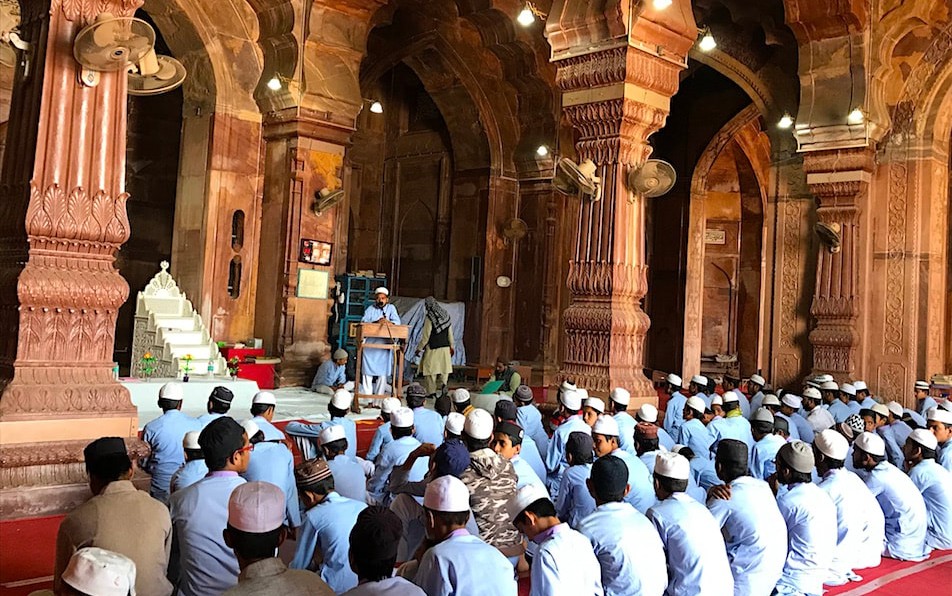
At a recent short bayan by a respected Imam, a heartfelt dua was made for the Ummah, with mention of the lands of Syria, Kashmir and Yemen, with of course particular focus on Palestine and the plight of the Muslims in Gaza.

It was a sincere dua, made by one whose eyes had almost dried out from the flow of tears narrating utmost barbarity faced by our brothers and sisters in Gaza.

After the bayan, I managed to engage the Imam sahib and share his grief, but with an additional positive note that yes indeed many problems exist in the Muslim world, but the solution too lies within our Ummah.

Today, for more than a hundred years, the Muslim Ummah lies divided into over sixty different nation states, testament to the colonial subjugatory policy of divide and rule. But in a hadith, the Prophet Muhammad (saw) drew a comparison on this issue using the example of a single stick and then several sticks together, the former being easy to snap and the latter holding firm under the pressure; with the point being within unification lies strength for Muslims.

The Imam sahib readily agreed to the concept of Muslim unity, manifesting in the form of political cohesion across the Muslim world into one state and drawing together all our individual strengths, into one powerful bloc. However, the Imam sahib expressed an all-too-common despondency at such a notion, citing an oft quoted example to support his point – that our masajid (mosques) cannot even agree on citing the moon and hence the day of Eid, so how can we unite politically as one people?

This example actually proves the opposite – that in fact Muslims can unite effectively under the right conditions. How?

The real point to note here is that a masjid is not just an indivisible entity but is itself an organisation with a governing structure and people within it of different positions, authority and influence, who collectively work together to run the masjid. So naturally within any masjid there will be difference of opinions over the running of the masjid, dispersion of funds and, on topic of this example, the basis of citing the moon and declaring the start and end of the Islamic month and hence the day of Eid.

But every masjid has in place as a presiding authority, in the form of an Imam or Head of the committee, who has been handed responsibility for running the masjid. It is the Imam or Head of the committee, after consulting those around him and examining the Islamic evidences, who then states his decision regarding the moon sighting and hence the day of Eid for that masjid. The other members of the masjid then set aside their opinion, if it is different, and instead fall in line with the Imam’s or Head of Committee’s decision. Thus, the masjid functions without conflict and disorder.

The exact same model, but on a larger scale, applies to the governing state. Here a political Imam, or Khaleefah, is also appointed to lead the state, whose role is to consult the advisors and department officials around him and, after reviewing the Islamic evidences, determines what the status of the moon sighting is and hence the day of Eid. Once the Khaleefah issues his declaration, every masjid, region within the state etc falls in line with this and the entire Ummah celebrates Eid on one day, with no disunity or conflict.
Which Flag?

Damascus has fallen.

The tyrannical Assad regime, which held power for over half a century, is no more. This regime, infamous for its torture chambers that claimed tens of thousands of lives and its brutal suppression resulting in hundreds of thousands more deaths, has been ousted. After nearly fourteen years of revolution, the rebel factions, united in their cause, have achieved the unthinkable: they have finally brought an end to this dark chapter of oppression.

But what comes next?

The revolutionary factions, united on the battlefield, must now grapple with the monumental task of governing the country. Syria, a land steeped in history and a crossroads of civilizations, has long been central to the Islamic world. From its liberation by the Prophet Muhammad’s (saw) companions (ra) in the 7th century to its centuries under Islamic rule, Damascus stood as a beacon of faith, knowledge, and governance. The stakes are high: will this historic legacy guide Syria’s future, or will it be squandered?

The answer lies in unity. The factions must establish a shared vision for governance. Without agreement on the principles that will underpin the new Syria, the country risks descending into fragmentation, infighting, and renewed strife. Meanwhile, external states remain active behind the scenes, eager to exploit divisions and reassert their influence. These powers aim to maintain the status quo: a secular system that installs local puppet rulers—whether dictatorial or democratic—who prioritise foreign interests at the expense of the people’s welfare and aspirations.

One of the most visible symbols of the new system will be the flag the country chooses. Retaining the current nationalistic Syrian flag, a relic of the Arab Revolt devised by the then British Empire, would signal a continuation of the secular system. This flag, rooted in the dismantling of the Ottoman Caliphate and, with it, thirteen centuries of Islamic governance, represents a fragmented, nation-state model. It stands in stark contrast to the Islamic ideal: a unified ummah without internal borders, governed by a single authority under divine law.

The alternative is clear. To embody the aspirations of the people and align with Islamic principles, Syria must raise the flag of the Prophet Muhammad (peace be upon him). This flag, a symbol of unity, justice, and faith, has the power to rally the nation and inspire solidarity across the Muslim world. By choosing this path, Syria can position itself as a beacon of hope and a catalyst for broader Islamic unity.

The choice of the flag is not merely symbolic; it is a declaration of the country’s direction. Will Syria succumb to the pressures of external powers and internal disunity, or will it seize this historic opportunity to lead with faith, purpose, and vision? The decision lies in the hands of its people and their leaders. May they choose wisely.

Pakistani Qawm, the Loan Sharks, and a $250 Billion Debt

The OAP

Tabitha Richardson, an 83-year-old Old Age Pensioner (OAP) residing in Wales, UK, at first glance is your typical unassuming elderly lady, balancing health issues of someone her age whilst trying to maintain a decent quality of life. But there is one difference – she is a ruthless loan shark, preying on desperate people struggling amidst the UK’s cost of living crisis. Through connections with local gangsters, Tabitha enforces debt collection of loans leaving families destitute. One family, for instance, was left desperate with only £100 per month to live on after handing over much of their income to her.

The plight of the Pakistani people mirrors this grim scenario but on a national scale. For Pakistan, a country with vast resources, also stands ensnared by ruthless loan sharks that on the surface may look innocent, but this composition of international financial institutions and national civil and establishment leaders come together to perpetually indebt the country, enslaving its people.

The Scale of the Debt

Pakistan has amassed around $250 billion in debt from institutions like the IMF and the World Bank. Despite constant repayments, the amount due remains daunting due to compound interest. Each year, Pakistan borrows more, not for development, but to service existing loans. Currently, the country allocates a staggering 52% of its annual budget, or $35bn, for interest payments alone on debt servicing.

The IMF’s Grip

The IMF’s stringent conditions have entrenched its control over Pakistan’s economy. It dictates policies that exacerbate inflation, devalue the currency and impose heavy taxation on the populace. Public spending on essential services like healthcare, education and infrastructure is continually slashed to meet debt obligations. The IMF facilitates this by entrenching its people throughout key government finance positions, ensuring loyalty to its mandates.

Asset Stripping

Under IMF directives, Pakistan is selling off state enterprises and assets. Critical resources, including energy utilities, mineral reserves and state-owned enterprises like PIA, have been privatised or on the course to being so, stripping the nation of its wealth and placing it in the hands of private ownership.

The Players in the Game

The network of those benefiting from Pakistan’s debt is extensive. It includes not only corrupt political dynasties like the Zardaris and Sharifs and top establishment officials but also technocrats with Western degrees and refined public personas. To the dismay of many, even Imran Khan and his PTI party, despite their anti-corruption rhetoric, has played its part in this racket. During their tenure from late 2018 to early 2022, they borrowed at an average rate of $10 billion per year, double the annual rate of the previous administration. The PTI also granted the State Bank of Pakistan autonomy, effectively ceding control to the IMF, and appointed IMF affiliates to key positions to effectively take charge of the economy.

A Call for Radical Change

The solution is not a mere change of corrupt leadership but a complete overhaul of the corrupt policies that perpetuate this cycle of debt and economic misery. Pakistan needs a ruling system that rejects interest-based loans, avoids excessive taxation, prevents the free printing of currency and halts the sale of state assets.

A genuine Islamic system, with its detailed economic system pertaining to the prohibition of usury, minimal taxation and that too of only accumulated wealth and not periodic income, bimetallic currency standard and a disciplined management of state resources, is the only framework that will lead the state to not just recovery, but genuine prosperity.

The Perfect Moment

All disagreed with him – not a single one supported his judgement in this critical situation.

Although seasoned over the years, proving their faith and nerve across countless trials and battles, the senior sahabah (ra) stood opposed to the newly appointed Khaleefah’s decision.

After twenty three years of toil and effort, particularly accelerated during the latter ten year period with the Islamic state’s founding in Medina, the Prophet (saw) had subdued or convinced the tribes across the Arabian Peninsula into submitting and living under the rule of Islam.

Almost instantly at the death of the Prophet (saw), however, almost all these tribes broke away from the Islamic state’s authority, with many renouncing Islam itself and refusing to fulfil their obligations to the state. But now numerous tribes, including some of the largest and most powerful, dared to go further and take up arms against Medina itself in a bid to overrun the Islamic state at this vulnerable point.

Caught between grieving the recent death of his beloved lifelong friend and guide amidst dissenting views from his trusted fellow companions (ra) on one hand and an alarming rebellion from unruly tribes on the other – Abu Bakr (ra), otherwise a softly spoken man, stood resolute like a rock.

The sahabah (ra), comprising outstanding veterans the likes of Umar (ra) and Abu Ubaidah (ra), had tried to persuade Abu Bakr (ra) otherwise. They (ra) explained that by sending the main army of the Muslims many miles away from Medina and for so long, at this politically delicate time, would leave the Islamic state defenceless in the face of revolting tribes. On top of this many battle hardened commanders within the army were perplexed at the appointment of the young Usama Ibn Zayd (ra) as the Amir of such an expedition.

Abu Bakr (ra) listened patiently to their advice, but outright rejected it. He was instead determined to hear and obey one of the final commands issued by the Prophet (saw) to the letter, and put his complete trust in Allah (swt) in the process and send out the army under the command of Usama (ra). In the words of Lt Gen (Rtd) A.I. Akram of the Pakistan army, who documented and narrated in detail the early battles of Islam from a tactical perspective, this decision stood in complete contrast to military principles and thinking.

The army of Usama (ra) broke camp and marched out. On sight of this, it ultimately had the opposite effect on the apostate tribes opposing Medina and eager for confrontation. They came to the conclusion that if Medina could send out an army this size at such a perilous time, then what remained behind must be more formidable, and so attacking Medina would be a grave mistake. The few tribes that did attempt to attack, were driven off by gathering warriors from Banu Hashim, the tribe of the Prophet (saw), whose men remained behind to see to the burial of the Prophet (saw).

It was later considered that Abu Bakr’s (ra) short but instrumental two year period as Khaleefah, where he regained control of all of Arabia and positioned the Muslim armies for their conquests over the superpower empires of the time, Persia and Byzantine, can be traced to this one decision and the blessing it brought along with the confidence it inspired in the Muslim soldiers.

In fact such one sided odds were almost always the case with the battles Muslims fought. Never had they been adequately prepared for the often precarious circumstances they were thrown into.

The battle of Badr was the first example, where a Muslim force had set out to raid an enemy trade caravan, only learning en route that a much larger army had been sent out by the Quraish to confront them. The Muslims had only 300 odd men including only two cavalry. The Quraish army in contrast was numerically much bigger and far better equipped. Yet the Muslims stepped out into the battlefield with their conviction as their main armour and weapon and earnt a famous victory.

Equally the last major battle fought in Sham by the Muslims with the Byzantine empire was of colossal scale. The Eastern Roman empire would draw together five huge armies comprised of professional soldiers into one vast army numbering around 200,000, a sea of men that dwarfed the 40,000 odd disparate Muslims when the two forces met on the plain of Al Yarmouk, with the battle front being several miles long. Despite this, after six days of battle, the Muslim army obliterated the Roman army and dealt a decisive blow that marked the end of the Eastern Roman Empire in the region.

So never was there a ‘perfect moment’ for the Muslims to confront the enemy. They were almost always on the back foot by lacking something physical in nature or with pivotal conditions aligned against them. But as Muslims they stepped forward with what means they had, improvised where they could, bound together like a solid wall with their faith as cohesion – and time and time again they defeated an enemy multitude in size. Without a doubt this has always been, and always will be, the formula for success for all Muslim armies.

Equally today, as Gaza cries out to the Muslim armies to mobilise and rescue it from the tyrannical genocide inflicted by the Zionist entity, the Muslim officers of the Ummah’s sizeable armies, who don the names of greats, Umar, Khalid, Abubakr, Saad, Ali and so on, must remember that there never will exist a ‘perfect moment’ for them to act. There will forever be something lacking of material nature or some political climate positioned against them. But nevertheless they must step in the footsteps of our great predecessors and make what preparation they can within the means they have and then place their entire trust in Allah (swt). This is the need of the hour, not only for the oppressed in the Ummah, but for their very own souls, as only this way will the Muslim officers avoid eternal punishment and instead earn victory in this life and everlasting reward in the next inshaAllah.

The Silence

The sudden piercing sound shattered the brief calm as it travelled at lightning speed through the darkness. Those familiar shuddered at what was to come next, for this was unmistakably a JDAM US made bomb, approaching 2,000 pounds in weight, homing in rapidly on its target.

The destruction was absolute. The whole structure came down within seconds in a ball of fire amidst a deafening explosion. Instantly more than a thousand innocents, mostly children, seeking treatment and refuge or both, were torn to pieces, body parts scattered like debris, with their souls hastening to their Lord. The Al Ahli hospital in southern Gaza was no more, its annihilation nothing less than a war crime of epic proportions, committed by a Zionist fascist state desirous to conquer more territory no matter the cost. 

On the ground mothers wailed over the lifeless bodies of their babies, fathers cried in despair, clutching hopelessly to what remained of their bloodied children. The cries of grief, anger and desperation echoed long into the night and do so to this day.

Imagery and videos of the carnage filled social media, reverberating across the globe within minutes. The Muslim world has reacted. Charged crowds have taken to the streets in cities across the Muslim world, focussing their anger on Israeli and other embassies they hold responsible, eager to bring to account those that have butchered their fellow brethren, with civilians of all backgrounds willing to take up arms in the defence of their brethren.

Even in the Western world, huge demonstrations have taken to the streets, outraged by their governments’ blind support for an illegitimate state whose standing today has been built ruthlessly on ethnic cleansing and genocide. “Free, Free Palestine” are words that today reverberate in the centres of power in the capitals of Europe and US.

Amidst the uproar, a deafening silence has emerged from those that matter the most. As Gaza, an open air prison on a tiny land strip, continues to be obliterated whilst under a brutal siege, having 6,000 bombs dropped upon it within a week, more than what the US dropped upon Afghanistan within a year, no military protection has arrived in their defence.

Across the Muslim world, with collectively soldiers numbering millions and the combined arsenal rivalling any global superpower, not a single sound is to be heard from the military barracks in defence of the blessed land of Palestine, where countless prophets have walked upon, home of the third most holiest mosque in Islam and where Prophet Muhammad (saw) himself led all the prophets (as) in prayer and ascended to the heavens. Not a single bullet fired, not a creak of a tank, alas not even a single takbeer is heard coming from the Muslim soldiers and officers in response to the ongoing massacre.

And this includes Pakistan. Arguably the strongest power amongst Muslim states, a potent fighting force reared on Islam possessing a well-trained and hardened army of over a million men, standing and reserves, and the only nuclear power in the Islamic world. 

Yet the time to act is now.

Right now.

No longer can the Pakistan Army sit on the fence, suspended in a no-man’s land between Haq and Baatil, of desiring to act but not acting. It is decision time.

Pakistan’s military officers; the majors, colonels, brigadiers and generals and the like, need to know that failure to engage comes with grave consequences. Firstly, no longer can they claim to represent Islam and have they the right to name their battle tanks after Khalid (ra), the fearless sahabi and general, who fought over a hundred battles leading from the front, or their missiles as Ghauri, who liberated much of India with Islam centuries ago, nor their navy vessels as Zulfiqar, the fearsome sword given by the Prophet Muhammad (saw) to Ali (ra). Indeed they will no longer have the right to these weapons nor the even the right to don their military uniforms. 

Secondly, and much more profound, they need to brace themselves for the inevitable punishment of Allah swt in this life, and the next, that will befall them at any moment, from any direction and in any form, as a result of His (swt) wrath over their persistent inaction despite having the means to act.

But equally they need to remember, that if they help Allah’s swt cause, Allah swt will forgive and help them. Indeed they will be up against great powers, but as their illustrious predecessors before them experienced in similar situations, victory is theirs if they place their complete trust in the All Mighty, knowing that the All Powerful is on their side.

So let the Pakistan military march forth to Palestine, to liberate the lands and masjid Al Aqsa, rallying every other Muslim military and force behind it in the process, ending this period of intense oppression in the process and ushering in the just reign of Islam under the Khilafah.

Pakistan’s Electricity Racket

Meet Senator Samina Mumtaz Zehri.

An accomplished lady. A lawyer by education, she progressed to enrol on Sindh’s High Court in 2012 and eventually was elected as a senator in Pakistan’s Senate in 2021. Indeed every youth’s aspiration to embark on a successful career. But arguably her most successful accomplishment, little doubt as a result of her family’s political heritage, was to be appointed as a director for HUBCO.

HUBCO, along with its subsidiary companies, makes it the largest of Pakistan’s numerous Independent Power Producers (IPPs), who over the last few decades have established private electricity production facilities to sell the electricity produced to the Pakistan government. In capitalistic ideological theory which espouses unrestricted freedom of ownership, the principles of which govern Pakistan, it’s all well and good.

But the reality that has resulted is nothing short of legalised criminality and a system of injustice and oppression being imposed upon the masses of Pakistan.

The contracts which the IPPs have signed with the Pakistan government are no ordinary deals, where two parties enter into a business arrangement in a win-win scenario. Here there is only one winner, the other being a clear loser.

The IPPs have signed sovereign guarantees with the state of Pakistan, where the state has to make payments to the IPPs at consistently exorbitant unit rates of electricity. Further these payments have to be in US Dollars, and not the ever weakening Rupee. And the biggest crime of all – the payments made to the IPPs are not based upon the electricity actually provided to the electricity grid, but rather it is paid on the basis of the declared generation capacity of the IPPs, known as capacity payments. So if a plant provides 200MW of electricity to the state, but has a total generation capacity of 1000MW, the IPP will be paid by the Pakistan government – or rather ultimately the Pakistan masses – for the full 1000MW, in US Dollars, at ever increasing rates.

The result? IPPs have been one of the most lucrative businesses which Pakistan’s powerful political families, business mafias and the like have entered into, with the country’s IPPs collectively earning an annual $5bn, equivalent to one tenth of Pakistan’s budget. On average to date, they have made up to an eightfold return on their investments, with further guaranteed windfall profits set to pour into their coffers for years to come.

Indeed such rich elite of Pakistan now figuratively and literally sit alongside the world’s wealthiest. The recent Titan submersible that tragically imploded on its way to explore the Titanic wreck, had on board Shahzada Dawood and his son from Pakistan’s Dawood group, in company with Western billionaires, each paying a staggering sum of $250,000 to embark on the expedition. The Dawood Hercules Group, one of Pakistan’s most powerful and wealthiest that includes foreign US investors, owns several of Pakistan’s IPPs, including a share of HUBCO.

All the whilst the common man is now suffering tremendously, with electricity bills surpassing the monthly salaries of many, leaving them to cut back drastically on so many essentials such as education for their children, food, electricity etc, leaving tens of millions in a state of despair and terror on how to survive and make ends meet on a daily basis.

My Paper Box

I live in a paper box.

Paper walls have surrounded me all my life and I am obliged to see them as my home.

Many activists and thinkers drove the creation of my box, rallying many to flock to it, reaching out to their sense of religious devotion to do so.

You see my box was designed to serve a purpose beyond a mere abode. It was meant to connect me back to my identity and purpose in life, as exemplified by a movement that transformed the world 1,400 years ago. For this reason I and others like me train hard and dedicate our lives for the defence of our box, willing to take to the battlefield and face the enemy on the cry of Iman, Taqwa, Jihad fi Sabilillah.

But at times various issues trouble me. 

Much turmoil have I witnessed, with poverty, exploitation and injustice rampaging the masses across decades, enslaving them to the diktats of powerful families and mafias of the land, as the laws that are followed stand contrary to my deen. A much championed label, however, slapped loudly across my box – ‘no law contrary to Quran and Sunnah’ – seeks to lay my mind at rest.

A people who I saw as my own have been occupied and brutally oppressed. All my life I was determined to defend them, free them from oppression. But a paper wall merely shifted to leave those people on the outside of my box. No longer am I expected by my great ones to worry about clenching my hands and beating my chest, ready for action. Instead I’m told to merely raise these hands, make some dua, and look the other way.

Equally there are another people I feel for, in their own but ever shrinking paper box, sitting on a land which I see as blessed and on whose soil countless prophets have set foot on. They are subjugated to relentless onslaughts year after year, with particularly harsh and symbolic treatment meted out in the holy month of Ramadhan, including within the sanctity of the third most holiest mosque itself. But my tanks, fighter jets and missiles will not see the light of day for this cause, as the colours draped across their box conform not to mine.

I hear sincere and intelligent discussion amongst some though that enough is enough, that the All Mighty is ever observing and noting, awaiting to account, and so how long can we afford to watch our Ummah suffer, in our box or outside our box? That there is a remedy, to do away with our paper walls that give sovereignty to man and instead unify under the one true banner of La ilaha illa-Allah, making our Lord sovereign and uniting our strengths as we did of old. 

But who will be bold enough to make the first move? Who will be the next Saad Ibn Muadh (ra)? Should I forfeit this immense reward to another?

As I decide and as my window of opportunity gradually diminishes, it’s time for another ‘independence’ day celebration, whilst I carry on living in my paper box.